
Portable Generators: Load & Connection Planning

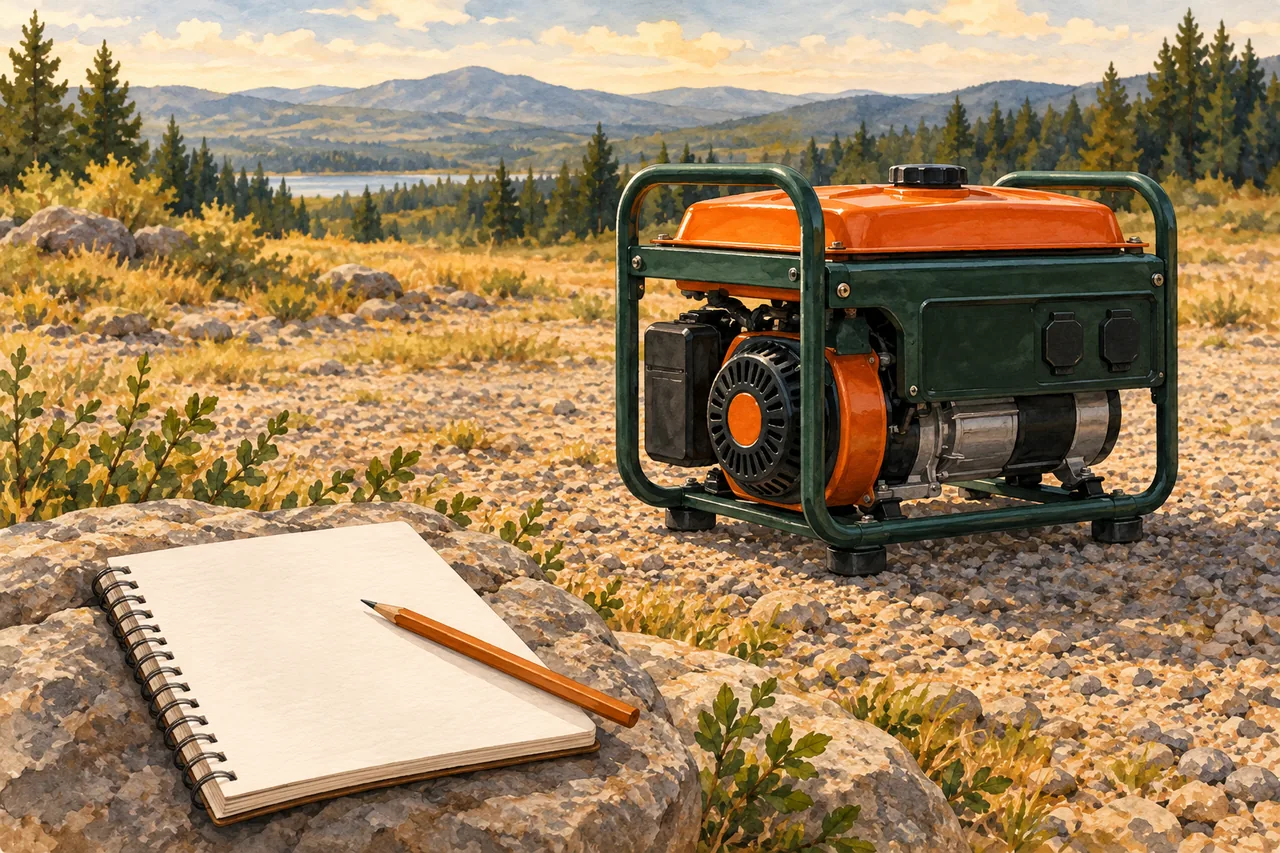
A portable generator should fit the jobs you actually need it to do. Keeping a refrigerator and a few lights working is a different purchase from supporting several motor-driven appliances.
Before comparing the biggest wattage number, write down the equipment you want to power, how you will connect it and who will operate the generator during an outage.
This guide covers fuel-powered portable generators. A battery power station and a permanently installed standby system need different comparisons, even when a shopping category includes overlapping backup-power products.
Use the exact model manual, rather than a broad category label, to identify what you are buying.
Start with these three checks
- List the equipment you need to power.
- Rule out unsuitable operating locations first.
- Have a qualified professional confirm the connection plan.
Portable generators: start with a load list
Make two lists: equipment you need continuously and equipment you can use at separate times. Include the appliance model, its electrical requirements and whether it has a motor or compressor.
A refrigerator cycling on while a pump starts is a different demand from charging a phone. If you cannot find starting requirements, ask the appliance manufacturer or an electrician rather than filling the gap with a generic chart.
Rated output and maximum output are different. For example, the Honda EU2200i owner manual lists 1.8 kVA rated output and 2.2 kVA maximum output at 120 volts. That example explains why the model name alone is not a continuous-load allowance.
It is not a recommendation that this generator will run your particular appliance combination.
Ask a supplier to show how each shortlisted generator supports the proposed running load and relevant starts. Keep the voltage and receptacle details beside the wattage. A large headline output does not settle whether the generator provides the supply an appliance requires.
Read output ratings in context
Compare like with like. Record the fuel used for a rating, the load used for a runtime claim and the conditions used for a noise figure. Do not compare one model’s light-load runtime with another’s heavily loaded runtime and assume the difference measures efficiency.
Ask for missing conditions before treating a number as a buying advantage.
For a dual-fuel or tri-fuel model, request the output table for each intended fuel. Also ask which hoses, regulators or other accessories the offer includes, without assuming the bundle is ready for every fuel source.
A qualified professional should assess any fixed gas-supply connection. Buying the fuel option is separate from confirming that your property can support it.
Think about the person moving the machine. Compare the operating manual’s handling instructions, transport dimensions and storage requirements. Ask whether the quoted weight includes fuel and accessories. A wheel kit does not answer whether one person can manage a threshold, slope or vehicle loading task safely.
Rule out an unsuitable operating location first
The CPSC generator safety guidance says portable generators belong outdoors, far from doors, windows, vents and other openings. Never run one in a home, garage, basement, shed or crawlspace, including with a garage door open.
A carbon monoxide shutoff feature does not make an enclosed location safe.
Use the exact manufacturer’s requirements and official safety guidance to assess a proposed site; this guide does not provide a universal clearance. If you do not have a safe outdoor operating location, stop the purchase and investigate another backup approach.
Do not improvise a weather enclosure that traps exhaust or blocks airflow.
Maintain working carbon monoxide alarms according to their instructions and CPSC alarm guidance. Read the generator manual’s moisture, hot-surface, fueling and storage warnings before purchase. Those requirements affect whether the generator is practical for your household, not just how you use it later.
Choose the connection plan before the generator
Distinguish supplying individual appliances from supplying household wiring. The Honda manual warns that an improper building connection can backfeed utility lines and endanger people. Have a qualified electrician assess a household backup connection, compatible transfer equipment and the exact generator.
Never feed generator power into a household wall outlet.
For appliance connections, ask which manufacturer-approved connection method and appropriately rated equipment suit the intended loads and location. Do not treat a receptacle adapter as proof that the voltage, current limits or grounding arrangement are correct.
This is a buying checklist, not an electrical installation procedure.
On a small screen, swipe or scroll the table to compare all columns.
| Buying question | Evidence to request | Reason to pause |
|---|---|---|
| Can it support the intended appliances? | Rated output, starting capability and appliance requirements | The comparison uses peak wattage alone |
| Does the fuel plan work? | Fuel-specific ratings and exact included accessories | The offer leaves supply requirements unclear |
| Can you use it safely outdoors? | Manual requirements and a realistic operating location | The only proposed location is enclosed |
| How will it supply power? | A confirmed appliance plan or electrician-assessed household connection | The plan relies on a wall outlet or an improvised cable |
Compare ownership, not just the machine
Ask who supplies service locally, which maintenance items are required and how the generator should be stored between uses. Check the exact warranty terms for the intended application.
Request a written list of included items so you can compare the complete purchase rather than two differently equipped boxes.
Once those questions are answered, browse Patioora portable generators with your load list beside you. Confirm the exact model and current offer details before ordering. A smaller shortlist with documented answers is more useful than a long list sorted by maximum watts.
Frequently asked questions
Should I buy by starting watts or running watts?
Check both against the equipment you intend to use. The running rating concerns sustained operation; starting demands need separate confirmation. Ask for a model-specific assessment if several motors may start close together.
Does a carbon monoxide sensor make garage use safe?
No. CPSC guidance requires outdoor use away from building openings. Keep the safety feature, safe location and household alarms as separate precautions; none makes indoor operation acceptable.
Can a portable generator power household circuits?
Only through an appropriate, professionally assessed connection arrangement. Have a qualified electrician verify the generator and transfer equipment before purchase. Never connect it to household wiring through a wall outlet.