
Air Compressors: Airflow, Pressure & Duty Cycle

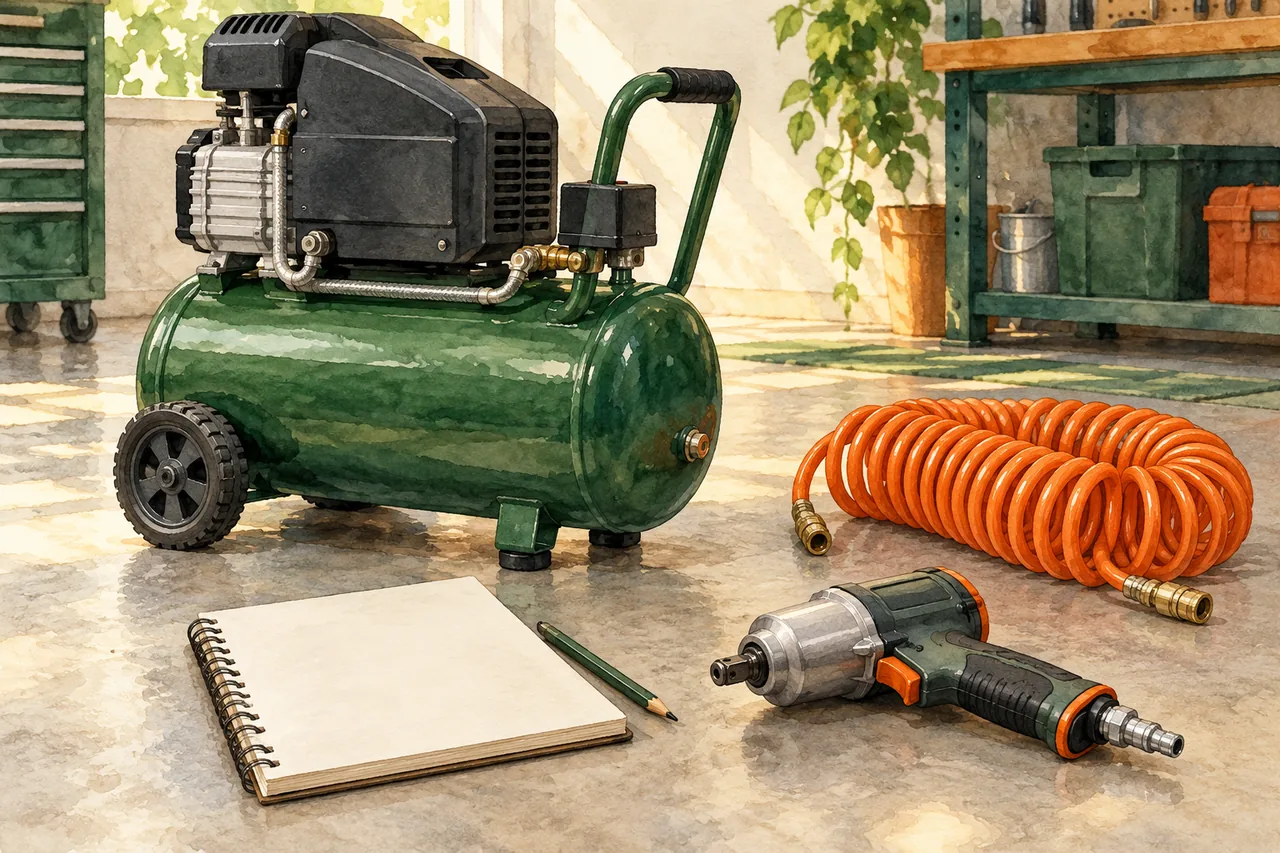
A compressor can look generous on paper and still leave a tool waiting for air. The tank is visible, so it attracts attention. The useful buying question is less obvious: can the pump supply the air your work needs, at the pressure the tool requires, for the way you intend to use it?
Start there when comparing air compressors, whether you are setting up a small repair space or replacing a workshop unit.
Write down your actual jobs before choosing a machine. Inflating a tire occasionally is a different purchase from running a sander through a long session. A useful shortlist names the tools, the available power supply and the place the compressor will live.
Accessories and convenience features come afterward.
Start with these three checks
- List each tool’s air demand at its operating pressure.
- Compare duty cycle separately from tank capacity.
- Check the proposed location and power requirements.
Compare air compressors at the pressure your tools need
Quincy’s air compressor buying guide treats airflow and pressure as the starting measurements. CFM describes air volume over time; PSI describes pressure. Read them together. A flow figure without its associated pressure is not enough to make a fair comparison, and a maximum tank-pressure headline does not tell you the airflow available while a tool is working.
Take the demand figures from each tool’s manual, rather than a generic chart if model information is available. Note whether the manufacturer describes average consumption or another operating condition.
Then identify which tools really will run together. A one-person garage may have several air tools but only one in use at a time; a shared workshop needs a different conversation.
Make a simple comparison sheet with separate columns for required airflow, required pressure and intended running pattern. Ask the compressor supplier to explain any measurement labels that differ between listings.
Do not silently treat CFM and SCFM figures measured under different conditions as identical. Missing information is a reason to ask a question, not a reason to select the larger-looking number.
Tank capacity and duty cycle answer different questions
A receiver stores compressed air; the pump replenishes it. That distinction, also explained in Quincy’s buying guide, is why tank capacity alone is a poor selection rule. A larger receiver does not turn a low-output pump into a higher-output one.
Consider capacity alongside the pump’s documented output and the manufacturer’s permitted operating pattern.
Duty-cycle language deserves a close read. Ask what the published rating means for the exact compressor, including its stated conditions and rest requirements. Do not assume two brands use the same rating convention.
If you expect long sessions, describe those sessions to the supplier and request a recommendation tied to the manual rather than a vague promise of professional performance.
For example, someone who uses an air tool briefly between other tasks should describe that stop-start routine. Someone preparing to do prolonged surface work should describe the length of the working sessions.
Those are hypothetical buying situations, not performance tests. The aim is to give the supplier enough detail to reject a poor match before you arrange delivery.
Check location and power before shortlisting
Record the actual electrical service available, including voltage and phase, and have a qualified electrician confirm suitability where required. Make that confirmation part of the installation assessment. A plug shape or a nearby outlet is not a complete installation assessment.
Ask about the exact model’s circuit, starting and connection requirements.
Measure the delivery route as well as the intended footprint. Include door openings, corners and the space needed for maintenance access. Ask who will unload and position a heavy stationary unit.
If portability matters, compare the documented weight and dimensions with how you will transport it, rather than assuming wheels make every route practical.
Identify the power source before choosing a location. The referenced Ingersoll Rand manual prohibits operating gasoline-engine compressors in a confined area. Do not treat a garage or shed as a suitable running location for an engine-powered compressor.
For an electric model, obtain its exact placement and ventilation requirements before considering an enclosed workspace. Compare noise figures only when the manufacturer states how they were measured.
Plan hose routing so normal movement around the work area does not depend on stepping over the same hose repeatedly. These practical details belong on the purchase sheet, not on a list of problems to solve after the machine arrives.
A decision table for your shortlist
On a small screen, swipe or scroll the table to compare all columns.
| Your work pattern | First comparison | Question before buying |
|---|---|---|
| Occasional inflation and short tasks | Tool pressure and documented delivered air | Does this model support the intended accessories? |
| Long tool sessions | Delivered air and duty-cycle terms | What operating limits apply to this exact model? |
| Several simultaneous users | Combined demand and installation design | Has the supplier sized the whole system? |
| Moving between locations | Transport dimensions and available power | Can it be handled and operated as the manual requires? |
Safety and ownership checks worth making early
Read the warnings before purchase. The Ingersoll Rand compressor quick-start manual warns against changing pressure-control safety devices or drilling, welding or otherwise altering a receiver. It also requires appropriate electrical connection and cautions that the machine may start automatically.
Treat these as reasons to obtain the correct installation and service support, not as workshop modification projects.
Ask how the selected model’s routine checks, condensate management and scheduled service will fit your workspace. Locate its service information and replacement consumables. If a used tank has unexplained repairs or a seller cannot provide identification, stop and seek qualified assessment rather than trying to restore it yourself.
- Save the exact compressor and tool manuals.
- Record airflow at the needed pressure and clarify duty-cycle conditions.
- Confirm power, placement, delivery and access requirements.
- Identify the required hoses, fittings and air treatment for the application.
- Request a written explanation of unresolved compatibility questions.
Use those notes when reviewing Patioora’s air compressors category. Category listings are a starting point for comparison, not proof that every machine suits your tools or premises. Choose the model whose documented limits fit the work you can describe.
Frequently asked questions
Does a bigger tank mean a more powerful compressor?
No. Tank capacity describes stored air, while pump output determines replenishment. Compare delivered airflow at the required pressure and the model’s operating limits.
Should I buy by horsepower?
Use horsepower as supporting specification information, not the main sizing rule. Start with the tool manufacturer’s air demand and the compressor’s matching output figures.
Can I install a stationary compressor myself?
Do not assume so. Obtain the exact placement and connection instructions, and arrange qualified installation where required. This guide does not provide wiring, pressure-system modification or installation instructions.